+86-18925518708 leah@myerhw.com
- Product Name
- Product Keyword
- Product Model
- Product Summary
- Product Description
- Multi Field Search
 EnglishEnglish


Ever brought home a stunning, three-wick centerpiece only to realize it awkwardly teeters on your old warming plate? Or perhaps you purchased a beautiful artisan wax blend, but it simply refuses to fit beneath your current lamp. A mismatched heating device does more than just look clunky. It causes uneven melting, wastes expensive wax, and severely mutes your fragrance experience.
Candles arrive in countless shapes. From towering pillars to wide, shallow bowls, finding a universal heating solution feels impossible. You need precise equipment to maximize scent throw, guarantee household safety, and extend the lifespan of your favorite fragrances. In this comprehensive engineering guide, we walk you through exactly how to make the right choice. We explore dimensional requirements, compare heat transfer styles, and dive into the essential safety protocols every user needs to know.
Measure Before You Buy: Always verify the maximum height and width clearance of a base before making a purchase decision.
Versatility is Crucial: Adjustable-height lamps represent the most practical solution for consumers managing diverse collections.
Control the Heat: Utilizing a dimmable device allows you to regulate the melting speed and fragrance intensity for both massive and miniature containers.
Match the Style to the Vessel: Top-down halogen lamps are generally superior for large or wide containers. Bottom-up heating plates function best for smaller vessels and wax melts.
Selecting the correct jar candle warmer goes far beyond aesthetics. It is a strict requirement rooted in thermal dynamics. How does the heat reach the wax? The physical dimensions of your container directly dictate the heating mechanism required to achieve an efficient, safe, and even melt pool. When the scale of the device fails to align with the vessel, overall performance degrades instantly.
The primary purpose of these devices is to release fragrance without the hazards of an open flame. This delicate process relies entirely on the precise distance between the heat source and the wax surface. If a bulb sits too far away, the wax struggles to reach its optimal melting point. The result is a frustratingly weak scent throw. Conversely, if the heat is too intense or positioned too close, volatile fragrance oils evaporate rapidly. This drastically shortens the lifespan of your premium product.
Furthermore, utilizing an improperly sized device frequently leads to tunneling. Tunneling occurs when only the center of the wax melts. It leaves a thick, hard ring of unused wax clinging to the glass walls. This happens constantly when a narrow, focused lamp attempts to heat a wide multi-wick container. Proper heat distribution guarantees that the entire surface area melts evenly. It maximizes your aromatic output and ensures zero product goes to waste.
Clearance acts as a critical safety and functional metric. Vertical clearance refers to the physical distance between the resting base and the heating bulb. You must ensure adequate, unobstructed space so the glass rim never touches the bulb. Direct contact poses a severe fire hazard. It also exponentially increases the risk of the glass shattering due to localized thermal shock.
Horizontal clearance, or base width, proves equally vital. The platform of the device must be wide and sturdy enough to comfortably accommodate the full diameter of your container. Imagine placing a heavy, wide-mouth container on a narrow, flimsy heating plate. It instantly becomes a tipping hazard. A secure, flat fit ensures steady thermal transfer and minimizes the risk of catastrophic hot wax spills.
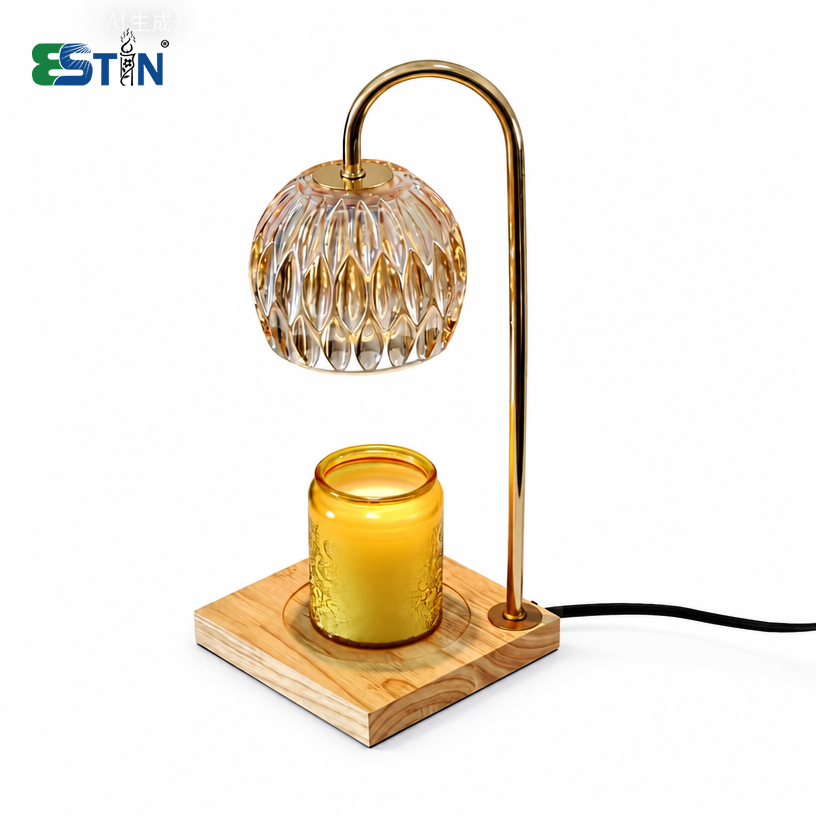
The home fragrance market primarily offers two distinct heating mechanisms: top-down lamps and bottom-up plates. Understanding the operational physics between these two styles is the first step in matching them with your specific collection.
Top-down models utilize a halogen bulb housed within a decorative lampshade to project radiant heat downward onto the wax surface. High-quality units typically employ a 35W to 50W GU10 bulb. This specific method brilliantly mimics the traditional burning process. It melts the top layer where the fragrance load is most concentrated.
This approach is highly effective for wide three-wick containers and tall, pillar-style designs. Because the radiant heat covers a broad surface area, it actively prevents tunneling. It provides a rapid, robust scent throw. For large capacities holding 14 to 22 ounces of wax, a top-down lamp is objectively the most efficient choice. The heat penetrates the top inch of wax quickly, releasing the aroma into the room without requiring the entire volume of the container to heat up.
In contrast, bottom-up models consist of a heated ceramic or metal plate upon which the container rests. The thermal energy transfers directly through the base via conduction. It gradually melts the wax from the bottom to the top.
While highly reliable, this method is fundamentally flawed for large capacities. It can literally take hours for the heat to travel through a massive volume of solid wax just to reach the top surface. By the time that top layer finally melts, the delicate fragrance oils at the bottom may have already degraded from prolonged, excessive heat exposure. However, for small single-wick designs, votives, or wax melt cups usually under 4 ounces, bottom-up plates remain incredibly efficient and energy-saving.
Recent market data highlights a massive shift in home fragrance habits. Consumers are rapidly abandoning open flames for tech-enabled, fire-safe alternatives. This industry trend demands smarter appliances capable of handling diverse wax blends and varying vessel sizes. For consumers who refuse to clutter their countertops with multiple devices, technological advancements now offer a unified, elegant solution.
An adjustable-height model typically features a telescopic neck or a smooth sliding mechanism. This allows the user to manually raise or lower the lamp head. From an engineering standpoint, this physical adjustment is an absolute game-changer for thermal management.
When melting a tall 22-ounce container, you can fully extend the neck to maintain a safe two-to-three-inch clearance from the bulb. Later, when switching to a short artisan votive, you can lower the neck. This brings the heat source closer to the wax, preventing the thermal energy from dissipating into the surrounding air. Mechanical versatility guarantees optimal heat transfer distance is always maintained.
While physical distance is undeniably important, controlling the actual heat output provides an entirely new layer of precision. Investing in a premium dimmable candle warmer allows users to manipulate the wattage output of the GU10 halogen bulb via a built-in dial or smart switch. Many modern units also integrate 2H, 4H, and 8H timers for ultimate safety.
Lowering the heat intensity is crucial when warming smaller capacities. It actively prevents the wax from boiling and stops the delicate top notes of the fragrance from burning off too rapidly. Conversely, when dealing with stubborn, high-melt-point waxes like pure beeswax in massive containers, turning the dimmer to its maximum setting ensures a full, even melt pool from edge to edge. This unprecedented level of thermal control extends the lifespan of your product.
To facilitate an objective and stress-free purchasing decision, it is incredibly helpful to categorize your collection by standard dimensions. Match them with the most appropriate technology below.
Container Category | Typical Dimensions | Optimal Device Type | Key Consideration |
|---|---|---|---|
Small / Votives | Under 3" Tall & Wide | Bottom-Up Plate / Low-Clearance Lamp | Heat escapes easily; requires close proximity to the heat source. |
Medium Standard | 3" to 4.5" Tall | Standard Fixed-Height Lamp | Ensure the vessel is positioned perfectly in the center of the base. |
Large / 3-Wick | Over 4.5" Wide or Tall | Adjustable Top-Down Lamp | Requires a wide, stable base to prevent accidental tipping. |
For miniature designs under 3 inches, standard top-down lamps often fail miserably. The bulb is positioned far too high. The heat disperses into the room before ever reaching the wax. The most effective solutions here are bottom-up plates or adjustable lamps set to their absolute lowest height setting. If utilizing a lamp, ensure the bulb is no more than two inches away from the wax surface.
Medium containers, such as standard single-wick apothecary styles, are the most universally compatible on the market. A standard, fixed-height lamp typically provides the ideal two-to-three-inch clearance right out of the box. The critical factor in this scenario is positioning. The vessel must be placed exactly in the center of the heating base so the halogen beam hits the wax symmetrically.
Large multi-wick designs demand substantial heat coverage. A top-down lamp equipped with a wide lampshade is mandatory. The thermal energy must reach the far outer edges of the glass. Additionally, the base of the device must be structurally sound. A heavy, glass-filled container requires a solid, wide platform to sit flat and securely. Adjustable height is highly recommended here to gracefully accommodate the rapid decrease in wax level over time.
Height and width are the primary metrics to track. However, the physical composition and structural design of the container heavily dictate how it interacts with applied heat.
Different materials possess varying degrees of thermal conductivity. This directly affects how quickly the wax melts and how dangerously hot the container becomes to the touch.
Tin/Metal: Metal is a highly efficient thermal conductor. Tins heat up exceptionally fast, especially on bottom-up plates. Users must exercise extreme caution. The exterior can quickly become too hot to handle bare-handed.
Glass: Thick glass provides moderate thermal conductivity and excellent heat retention. It requires consistent, sustained heat. Top-down halogen lamps remain the ideal, safest choice for glass.
Ceramic: Ceramic acts as a natural insulator. It takes noticeably longer to heat up but retains that heat for extended periods after the device is turned off. High-output top-down models are usually required to penetrate ceramic containers effectively.
The shape of the opening heavily influences internal airflow and heat retention. Wide-mouth designs allow heat to dissipate naturally, significantly reducing the risk of overheating. In stark contrast, designs with narrow openings can easily trap heat from top-down bulbs inside the vessel. This trapped heat accelerates the melting process unpredictably. Closely monitoring the melt pool or utilizing a dimmer switch to lower the temperature is strongly advised to prevent severe thermal stress on the glass.
Selecting a home fragrance accessory for someone else is an incredibly complex process. You rarely know the exact dimensions of their favorite brands. A recipient might prefer massive three-wick centerpieces for their living room, or they might strictly collect small, single-wick artisan blends. Because of this unpredictability, choosing the ultimate gift candle warmer requires a strategic focus on versatility, aesthetic adaptability, and built-in safety features.
When you purchase a fixed-height model as a gift, you are essentially gambling. If the lamp is too short, their large containers will not fit. The gift becomes entirely useless. If the lamp is too tall, their smaller containers will not receive adequate heat.
To completely eliminate this guesswork, an adjustable-height, dimmable model is the most logical choice. Telescopic necks allow the user to effortlessly accommodate everything from a tiny two-inch votive to a towering six-inch pillar. This ensures the gift is highly functional.
Beyond raw functionality, these devices double as prominent pieces of home decor. When evaluating aesthetics for a gift, consider the base material carefully. A wide, weighted base made of natural solid wood not only looks premium but provides critical stability. Combining this with a luxury crystal glass lampshade ensures optimal light refraction, creating a stunning visual ambiance in any room. Furthermore, always verify that the product holds recognized safety certifications, such as a UL or ETL listing.
Utilizing these devices brilliantly eliminates the hazards of an open flame, such as soot and smoke. However, it introduces a different set of thermal and electrical variables. Understanding the thermodynamics of glass and the physical properties of wax is essential.
The most critical safety concern when applying heat to glass is thermal shock. Most standard containers are manufactured from soda-lime glass. While generally heat-resistant, it is not immune to rapid temperature fluctuations or intense, localized overheating.
If the halogen bulb is positioned too close to the rim, the intense heat causes the glass to expand unevenly. This creates invisible internal stress within the material, eventually leading to micro-fractures or catastrophic shattering. Always maintain a minimum clearance of two to three inches between the lowest point of the bulb and the highest point of the glass.
For bottom-up plates, the primary danger occurs when the container is nearly empty. If a bottom plate is left on with less than half an inch of wax remaining, the glass base absorbs the vast majority of the heat. Without a sufficient volume of wax to act as a thermal sink, the glass overheats rapidly.
A fundamental difference between burning and warming lies in how the wax behaves. When you light a wick, the flame consumes the wax as fuel. The volume steadily decreases. When you use a lamp, the heat simply melts the wax to release the suspended fragrance oils. The wax itself never evaporates.
Over time, the top layer of wax completely loses its fragrance load. If you do not remove this depleted layer, the heat will struggle to reach the fresh, fragrant wax beneath it. To safely pour out depleted wax, follow this systematic approach:
Turn off the device: Allow the liquid to cool for approximately three to five minutes. It should remain liquid but drop below its peak temperature.
Prepare a disposal container: Never pour melted wax down a sink drain. It will immediately solidify in your plumbing. Use an empty metal can or a trash receptacle lined with thick paper towels.
Carefully pour the top layer: Using heat-resistant gloves, gently tilt the vessel to pour off just the top half-inch of liquid.
Wipe the rim: Use a dry paper towel to immediately wipe away any drips from the outside of the glass.
Resume warming: Place it back under the lamp. The fresh layer is now exposed to the heat.
These appliances rely on sustained electrical draw to generate high temperatures. Proper placement is non-negotiable. Never place your device on an unstable surface or near the edge of a table. Keep the unit away from drafty areas, such as open windows or air conditioning vents. Cold air blowing directly onto hot glass increases the risk of thermal shock.
Specifically, pay close attention to the wattage of replacement bulbs. High-end units require specific GU10 halogen bulbs, typically 50W. Installing a bulb with a wattage higher than the manufacturer's strict recommendation can melt the internal wiring and create a severe fire hazard.
Choosing the right equipment for your home fragrance collection requires a blend of careful measuring and an understanding of thermal dynamics. You must check clearance heights and base widths meticulously to ensure a safe, efficient fit. While fixed-height models work well for uniform collections, an adjustable, dimmable model undeniably offers the best long-term value.
Always prioritize safety features, sturdy natural wood bases, and proper heat management. A high-quality unit makes the perfect investment. It extends the life of your favorite scents, eliminates the dangers of open flames, and delivers a consistent, luxurious fragrance experience. Evaluate your jar sizes, apply the engineering guidelines discussed above, and explore premium solutions at Estin Home to elevate your space with absolute confidence.
Material compatibility is strictly dictated by thermal conductivity. Standard glass and high-quality ceramic are generally the safest and most effective options. Thick glass absorbs heat evenly. Ceramic retains heat well, ensuring a consistent melt pool. Metal tins can also be used, but they require extreme caution as they become exceptionally hot within minutes. Never use a heating device with containers made of plastic, untreated wood, or thin decorative glass not intended for high temperatures.
For optimal safety and performance, the halogen bulb should sit approximately two to three inches above the highest point of the vessel. This distance leverages the inverse-square law of thermal radiation. If the bulb is closer than two inches, the concentrated heat can cause the glass rim to overheat. If the distance exceeds four inches, the ambient air dissipates the thermal energy before it reaches the wax, leading to incomplete melting.
Technically, a bottom plate will eventually melt the wax inside a large three-wick container, but it is highly inefficient. Because a hot plate applies heat exclusively to the base, the thermal energy must travel through the entire volume of solid wax. In a heavy 22-ounce container, this process takes hours. By the time the surface wax finally melts, the bottom layers have been subjected to prolonged, excessive heat, degrading the fragrance oils. Top-down lamps are exponentially superior here.
Yes, you must always remove the lid before placing any container under a heating lamp. Leaving a lid on traps the thermal energy inside the vessel. As the air and wax inside heat up, the internal pressure increases. This trapped pressure and escalating temperature can cause the glass to fracture. Additionally, a lid completely blocks the evaporated fragrance oils from dispersing into your room.
Empirical data consistently shows that warming extends a product's lifespan by roughly two to three times compared to burning it with an open flame. When you burn a wick, the flame destroys the wax rapidly as fuel. When you warm it, the wax is never consumed. A standard 12-ounce product that burns for 40 hours can easily provide up to 100 hours of robust fragrance when used properly under a lamp.
Under no circumstances should you apply heat to a compromised glass vessel. Even a microscopic hairline fracture severely weakens the structural integrity of the glass. When thermal energy is introduced, the glass naturally expands. The stress of this expansion concentrates at the site of the existing crack, almost guaranteeing the glass will shatter. Safely extract the solid wax and transfer it to a silicone liner instead.
No, they actually preserve the scent longer if used correctly. An open flame burns off fragrance oils at extremely high, uncontrolled temperatures, which can destroy delicate scent notes. A dimmable top-down lamp allows you to melt the wax at a lower, controlled temperature. This gently releases the fragrance without scorching the oils, resulting in a cleaner, longer-lasting aroma. However, you must remember to pour off the top layer of unscented wax periodically to expose fresh fragrance.
From an engineering and safety perspective, leaving any heat-generating appliance on unattended overnight is strongly discouraged. While they are significantly safer than open flames, prolonged exposure to a 50W halogen bulb can cause the glass vessel to overheat, especially if the wax level is low. To mitigate this risk, always select a model equipped with a built-in automatic shut-off timer (such as a 2H/4H/8H setting) to ensure the device powers down safely while you sleep.


