+86-18925518708 leah@myerhw.com
- Product Name
- Product Keyword
- Product Model
- Product Summary
- Product Description
- Multi Field Search
 EnglishEnglish


Purchasing an aroma diffuser often leads to a frustrating cycle of trial and error. Consumers frequently plug a new unit into a small bedroom only to find the fragrance overwhelmingly potent, causing headaches and respiratory discomfort. Conversely, placing that same unit in an open-concept living area usually results in an entirely undetectable scent. This happens because most buyers focus heavily on aesthetic design or broad marketing claims. They ignore the technical relationship between diffusion technology, tank capacity, and room volume.
Selecting the correct unit requires more than picking a visually appealing shape. You must evaluate the physical space where the device will operate. We will break down a systematic, evidence-based framework for evaluating and selecting a Room Scent Diffuser based on actual square footage, airflow dynamics, specific diffusion mechanisms, and uninterrupted run times.
Capacity vs. Space: Small rooms (≤150 sq ft) require 100–200ml ultrasonic units, while medium rooms (150–400 sq ft) need 300–500ml capacities for optimal dispersion and adequate run time.
Technology Matters: Ultrasonic diffusers are ideal for enclosed bedrooms, whereas nebulizing diffusers are technically superior for large, open-concept spaces (400+ sq ft) because they do not rely on water vapor to carry scent.
Volume Over Area: Ceiling height and HVAC airflow (cubic footage) impact scent throw just as much as floor square footage.
Maintenance Realities: Larger units and nebulizers consume essential oils at a higher rate; factor ongoing consumable costs and drop-count scaling into the purchasing decision.
Effective aromatherapy depends on achieving a consistent olfactory baseline. The goal is to maintain a noticeable, pleasant fragrance without causing respiratory irritation or triggering olfactory fatigue. When a space is incorrectly sized for the output of the device, the scent particles either concentrate too heavily in a confined area or dissipate too rapidly across a wide expanse. Understanding the physical behavior of atomized essential oils is the first step in making an accurate hardware selection.
Floor area only tells half the story. To understand how scent travels, you must calculate room volume by measuring cubic footage. Multiply the length, width, and height of the space. A 300-square-foot room with standard 8-foot ceilings holds 2,400 cubic feet of air. A 300-square-foot loft with 14-foot ceilings holds 4,200 cubic feet of air. Even though the floor space is identical, the loft requires nearly double the scent output to achieve the same concentration. Relying solely on square footage metrics often leads to underpowered purchases for rooms with vaulted ceilings.
Airflow and environmental variables heavily alter the trajectory and lifespan of diffused essential oil particles. HVAC systems actively pull air out of rooms through return vents, rapidly stripping scent from the environment. Ceiling fans create downdrafts that force water-based mist to the floor before it can circulate at nose level. Open doors create cross-breezes that dilute the concentration. Furthermore, ambient humidity plays a massive role. In highly dry environments, the water vapor carrying the essential oil from an ultrasonic unit evaporates too quickly, causing the heavier oil particles to drop out of the air prematurely.
To properly evaluate your space before installation, follow these steps:
Measure the exact dimensions of the room, including the ceiling height, to find the true cubic volume.
Locate all HVAC supply registers and return vents. Avoid placing the unit directly under a return vent, as the scent will be immediately sucked into the ductwork.
Identify natural draft paths from windows and doors. Position the device upwind of the primary seating area to allow the natural air currents to carry the fragrance toward you.
Assess the ambient humidity. If the room is naturally damp, avoid adding more moisture with a high-capacity water-based unit.
The mechanism used to disperse the oil dictates how well the scent will travel through different room sizes. Not all atomization methods are capable of crossing large distances or penetrating thick air volumes.
Ultrasonic technology relies on a small piezoelectric disc located at the bottom of a water reservoir. This disc vibrates at ultrasonic frequencies, creating agitation that breaks the essential oil and water mixture into a fine, cool mist. A small internal fan then blows this mist up and out of the nozzle. Because they rely on water, these units are highly effective for small to medium enclosed spaces. They add a slight increase in ambient humidity, which is beneficial in dry winter months. However, the water vapor makes the scent particles heavy, limiting their travel distance. The mist naturally wants to fall. If placed on a low coffee table, the scent may never reach nose level for someone standing in the room.
Nebulizers operate without water or heat. They use pressurized air forced through a small tube to create a vacuum that pulls pure essential oil to the surface. A secondary stream of air blows across the oil, atomizing it into microscopic particles. This is the gold standard for large, open-concept rooms. Because the particles are not weighed down by water vapor, they remain suspended in the air for much longer periods. This superior scent throw and high concentration directly solve the undetectable scent problem common in expansive living areas. They push pure fragrance across vast distances, making them the only viable option for spaces exceeding 700 square feet.
Evaporative models use a fan to blow air through a pad soaked in essential oils, while heat models use low temperatures to accelerate evaporation. These are legacy technologies with severe limitations. The lighter chemical components of the oil evaporate first, leaving heavier base notes behind, which alters the intended fragrance profile. Their output is exceptionally weak, restricting their practical use to personal desk spaces or small half-bathrooms. We do not recommend these for any serious room scenting applications due to their inconsistent output and rapid drop-off in performance.
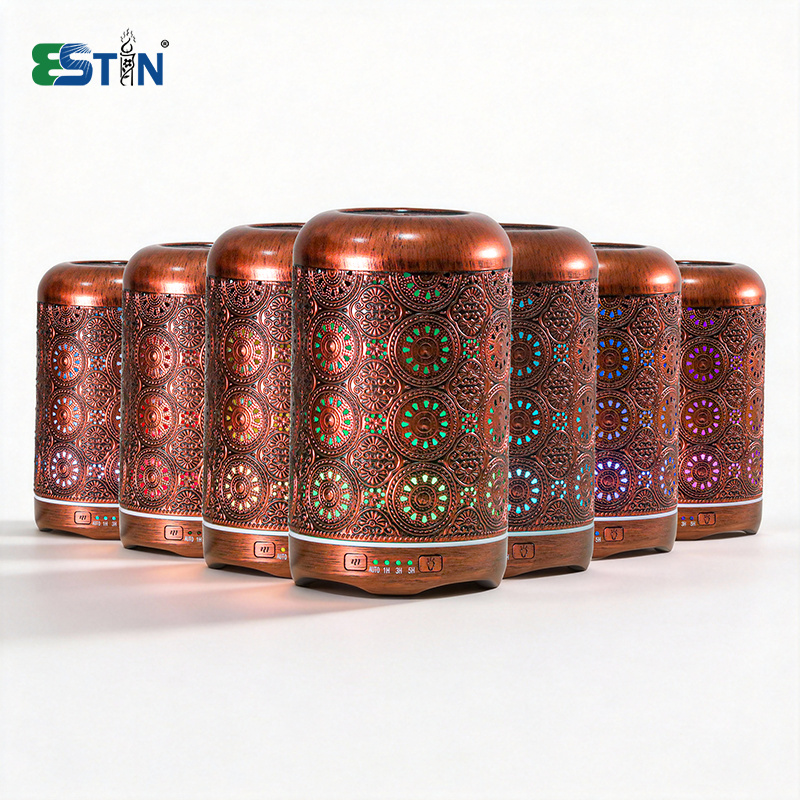
Matching the tank capacity and output rate to the specific dimensions of your room ensures optimal performance. The following benchmarks provide a reliable baseline for hardware selection.
Room Type | Square Footage | Recommended Capacity | Ideal Technology |
|---|---|---|---|
Bathroom / Home Office | Under 150 sq ft | 100ml – 200ml | Ultrasonic |
Standard Bedroom / Study | 150 – 400 sq ft | 300ml – 500ml | Ultrasonic |
Living Room / Open Kitchen | 400 – 700+ sq ft | 700ml+ or Waterless | Nebulizing / High-Cap Ultrasonic |
For confined spaces, precision is critical. Recommend 100ml to 200ml ultrasonic units for these environments. A low output rate prevents the air from becoming saturated. Over-saturating small spaces risks causing headaches, nausea, or respiratory irritation. In a 100-square-foot bathroom, a massive 500ml unit will quickly turn the air thick and uncomfortable, even on its lowest setting. Stick to smaller tanks that deliver a subtle, controlled fragrance. Placement is also key in tight quarters. Keep the unit away from electronics and paper documents in a home office, as the localized humidity can cause damage over time.
Standard bedrooms require a balance between scent density and run time. Recommend 300ml to 500ml ultrasonic units for these spaces. A 300ml tank provides enough water volume to run continuously through the night without running dry by 3:00 AM. Adjustable mist output settings are vital here. You need the ability to lower the intensity while sleeping and increase it during waking hours to maintain a consistent olfactory baseline. Position the device on a dresser or nightstand at least three feet off the ground to give the mist enough time to evaporate into the air before hitting the floor.
Standard water-based units fail completely in expansive areas. The heavy mist simply drops to the floor before crossing the room, resulting in wasted oil and zero fragrance on the opposite side of the space. For open floor plans, recommend nebulizing diffusers. If you prefer ultrasonic technology, you must select high-capacity (700ml–1000ml) units featuring dual-nozzle designs. Dual nozzles allow you to direct the mist in opposing directions, ensuring the aroma reaches across divided functional zones like kitchen islands and living room seating areas. In massive great rooms with vaulted ceilings, you may need to deploy two separate 500ml units at opposite ends of the room to create an overlapping scent profile.
Basements often suffer from poor ventilation and naturally higher humidity levels. Using a large ultrasonic unit in a damp basement will exacerbate moisture problems and potentially lead to mold. For these subterranean spaces, nebulizing technology is highly recommended regardless of the square footage. Home gyms require strong scent profiles to mask odors, but the heavy breathing associated with workouts means you must avoid over-saturating the air with heavy water vapor. A medium-capacity nebulizer running on a strict intermittent timer provides the necessary odor control without making the air feel heavy or difficult to breathe.
Tank capacity is only one variable in the equation. Understanding how the device manages that capacity determines its real-world effectiveness.
There is a direct trade-off between run time and mist density. A unit advertised to run for 12 hours on a 200ml tank is achieving that duration by releasing a very low volume of mist per hour. Conversely, a unit that empties a 200ml tank in 4 hours is pumping out a high density of mist. Larger tanks in big rooms are primarily necessary for achieving longer uninterrupted run times without the annoyance of constant refilling, rather than simply pumping out more mist at once. Always check the milliliter-per-hour (ml/hr) output rating. A standard bedroom unit should output around 30ml/hr, while a large room unit needs to push 50ml/hr to 80ml/hr.
Failing to scale your oil usage based on tank size and room volume guarantees underwhelming results. The standard baseline is 3 to 5 drops of essential oil per 100ml of water. For a small 100ml unit in a bathroom, 3 drops are sufficient. However, if you upgrade to a 400ml unit in a master bedroom, you must scale up to 12 to 20 drops to achieve the same scent concentration. Using 5 drops in a 500ml tank will result in mist that smells entirely like plain water.
Tank Size | Minimum Drops | Maximum Drops | Room Application |
|---|---|---|---|
100ml | 3 | 5 | Small Bathroom |
200ml | 6 | 10 | Home Office |
300ml | 9 | 15 | Guest Bedroom |
400ml | 12 | 20 | Master Bedroom |
500ml+ | 15 | 25+ | Living Room |
Olfactory fatigue occurs when your nose becomes accustomed to a scent and stops registering it, even though the fragrance is still present in the air. Intermittent settings, such as 30 seconds on and 30 seconds off, are critical for preventing this fatigue. By giving your olfactory receptors a brief rest, the scent remains noticeable over a longer period. Additionally, intermittent settings effectively double the run time of the device, making them highly practical for medium-to-large rooms. Look for devices that offer multiple timer intervals, such as 1-hour, 3-hour, and 6-hour shutoffs, to give you precise control over the environment.
Operational noise varies significantly between technologies. Nebulizers use internal air pumps that produce a noticeable humming vibration. Large ultrasonic units often generate a trickling water sound. While a 35-decibel hum is completely unnoticeable in a bustling kitchen or a living room with the television on, it can be highly disruptive on a nightstand in a quiet, small bedroom. Always check the decibel rating if the unit is intended for sleep environments. Anything under 25 decibels is generally considered whisper-quiet and suitable for sleeping.
The physical location of your electrical outlets dictates where you can place the unit, which in turn affects scent dispersion. Many modern units offer USB power or internal rechargeable batteries. While battery-operated units provide excellent placement flexibility, allowing you to position the device in the center of a room away from walls, they often sacrifice output power. A battery-powered unit will struggle to push mist as far or as forcefully as a unit plugged directly into a standard 120V wall outlet. If you are scenting a large room, prioritize hardwired units to ensure consistent, high-velocity output.
Deploying scent technology requires active management. Ignoring the physical realities of these devices leads to property damage and wasted money.
Running large-capacity ultrasonic diffusers in small, poorly ventilated rooms carries significant risks. Because these units constantly pump water vapor into the air, they can rapidly increase indoor humidity levels. If the room lacks proper HVAC return airflow or an exhaust fan, this excess moisture leads to condensation on windows. Over time, this dampness promotes mold growth on drywall, curtains, and bedding. Never use a 500ml+ unit in a closed 100-square-foot space. Monitor the room's humidity with a basic hygrometer; if it exceeds 60%, reduce the output or switch to a waterless model.
Provide a transparent assessment of ongoing consumable costs before purchasing. While nebulizing diffusers are technically superior for large rooms, they consume pure essential oil rapidly compared to water-diluted ultrasonic models. A nebulizer can easily consume a 10ml bottle of premium essential oil in a few weeks of regular use. Factor this ongoing replacement cost into your initial purchasing decision to avoid hardware abandonment. Buying oils in larger bulk bottles can help offset the higher consumption rate of nebulizing units.
Many homeowners attempt to place a standard standalone unit directly next to their HVAC return vent, hoping the system will pull the scent in and distribute it throughout the house. This is a flawed strategy. The filter inside your HVAC system is designed to trap airborne particles. It will catch the atomized essential oil, clogging the pleated filter material and rapidly degrading your system's airflow efficiency. Standalone units are designed for localized space scenting. If you want whole-home distribution through your ductwork, you must invest in a specialized cold-air HVAC scenting machine designed specifically to bypass the filtration system.
Larger tanks require more frequent and thorough scrubbing. Stagnant water left in a 700ml tank breeds bacteria and mold, which the device will then aerosolize into your breathing space. Ultrasonic units require regular wipe-downs with white vinegar to remove mineral scale from the piezoelectric disc. Nebulizers require strict maintenance routines, including regular flushes with rubbing alcohol, to prevent thick essential oils from permanently clogging the microscopic glass nozzles.
Follow this baseline maintenance protocol to ensure longevity:
Empty any remaining water from the reservoir daily to prevent stagnation.
Wipe the inside of the tank with a dry microfiber cloth after each use.
Perform a deep clean weekly by running a mixture of water and white vinegar through the system for fifteen minutes.
Use a cotton swab dipped in rubbing alcohol to gently clean the ultrasonic disc, removing any hardened oil residue.
For nebulizers, run pure isopropyl alcohol through the glass chamber every two weeks to dissolve thick resin buildups.
Measure your target room's length, width, and ceiling height to calculate total cubic footage before looking at device specifications.
Identify the primary airflow paths in your space, noting the locations of HVAC return vents and ceiling fans that could disrupt mist dispersion.
Select a nebulizing unit for open-concept areas over 400 square feet, or an ultrasonic unit for enclosed bedrooms requiring added humidity.
Establish a weekly maintenance schedule to clean the water reservoir or flush the nebulizer nozzles, preventing mineral buildup and bacterial growth.
A: A standard bedroom measuring between 150 and 400 square feet requires a 300ml to 500ml ultrasonic unit. This capacity ensures optimal scent dispersion without over-saturating the air, while providing enough water volume for an adequate overnight run time of 8 to 10 hours.
A: No. Single-point diffusion cannot push scent through hallways, around corners, or against HVAC airflow. To achieve whole-home coverage, you must use multiple units placed strategically in different zones, or install a specialized HVAC scenting system that connects directly to your ductwork.
A: This occurs due to mist dispersion limits, insufficient tank output, or olfactory fatigue. Water-based mist from standard units often drops to the floor before crossing large spaces. Upgrading to a nebulizing unit or a high-output device with intermittent settings usually resolves this issue.
A: The industry-standard baseline is 3 to 5 drops of pure essential oil per 100ml of water. You must scale this ratio up for larger tanks. For example, a 400ml tank requires 12 to 20 drops to maintain the correct concentration and prevent underwhelming results.
A: Ultrasonic units use water to create a heavy mist, which limits scent travel distance. Nebulizing units use pressurized air to atomize pure essential oil without water. Nebulizers provide superior scent throw for large rooms but consume oil at a much faster rate.
A: Yes. High ceilings increase the total cubic footage of the room, requiring the device to scent a much larger volume of air. Vaulted ceilings demand higher output rates or waterless nebulizing technology to achieve the same scent density as a room with standard ceilings.


