+86-18925518708 leah@myerhw.com
- Product Name
- Product Keyword
- Product Model
- Product Summary
- Product Description
- Multi Field Search
 EnglishEnglish


In the high-stakes arena of B2B sourcing, selecting the right supply chain partner remains a critical business decision. Choosing an incompatible supplier for bulk aroma diffusers often leads to severe operational disruptions. You might face high product return rates, damaged brand reputation, and significant lost revenue. Recent industry analyses reveal a distinct shift in the global scent marketing sector. Commercial buyers are rapidly moving away from traditional water-based units. Instead, they demand sleek waterless systems. This transition is heavily driven by a heightened post-pandemic focus on indoor air quality and the strict requirement to eliminate mold risks associated with standing water in HVAC systems. Consequently, nebulizing technology has firmly established itself as the premium tier of the commercial fragrance industry.
Unlike standard ultrasonic models that dilute essential oils, true nebulizers require advanced fluid dynamics and precision engineering to function effectively. This guide serves as the ultimate sourcing checklist. It is specifically designed to guide purchasing managers, hoteliers, and retail brand directors on exactly what to verify before signing a contract with a manufacturer. From evaluating raw manufacturing capabilities to identifying hidden mechanical defects on the assembly line, this comprehensive breakdown provides the empirical data and strategic frameworks necessary to make informed sourcing decisions.
Strict Quality Control is Non-Negotiable: Buyers must rigorously verify how a manufacturer tests for common hidden defects. Pay special attention to motor acoustic resonance, oil leakage under pressure, and internal material corrosion.
Customization is King: Top-tier manufacturers should offer robust Original Design Manufacturing services. They must demonstrate the capability to produce complex, trending designs using premium materials.
Commercial Expertise Matters: Ensure the supplier deeply understands diverse application scenarios. This includes hospitality, corporate offices, and retail, alongside seamless ductwork integration.
Assess Wholesale Policies: Clearly define Minimum Order Quantities, tiered pricing structures, and logistical responsibilities before committing to bulk orders.
Plan for Seasonal Demand: A reliable supplier must possess the scalable production capacity required to handle the traditional winter surge in diffuser demand without compromising assembly tolerances.
Before entering into any negotiations, buyers must first verify the core technological competency of the supplier. Nebulizing technology operates on Bernoulli’s principle of fluid dynamics. It utilizes a highly pressurized cold air pump to force pure essential oils through a microscopic atomizing tube. This process breaks the oil down into nanoparticles. The machine then disperses a pure, undiluted micro-mist into the air without using heat or water. Imagine a high-end hotel lobby. Facility managers absolutely cannot risk puddles of condensation forming on expensive marble floors. This specific risk factor makes true waterless nebulization mandatory for large commercial spaces.
Many standard consumer electronics factories claim to produce waterless diffusers. However, they often lack the specialized engineering required. Buyers must verify if the facility actually specializes in waterless technology. I have seen many factories that merely assemble basic humidifiers and outsource their nebulizer pumps from third-party vendors. To ensure technical transparency, request detailed engineering whitepapers or schematic diagrams. A competent supplier will readily provide empirical data regarding their air pump longevity, typically measured in continuous operational hours, and atomization efficiency. If a supplier cannot articulate the exact decibel ratings or micron sizes of their atomizing cores, it is a strong indicator of inadequate technical expertise.
A supplier’s ability to scale production while maintaining strict structural tolerances forms the backbone of a successful B2B partnership. First, evaluate the physical infrastructure of the factory. Key metrics to verify include the total square footage, the number of automated assembly lines, and the maximum monthly output capacity. Relying on a supplier with insufficient capacity frequently leads to severe supply chain bottlenecks during peak retail seasons.
Furthermore, robust Original Equipment Manufacturing services are critical for brands looking to differentiate themselves in a saturated market. Top manufacturers assist brands through custom mold creation, private labeling, and the application of unique material finishes. Moving beyond basic injection-molded plastics, the premium market now demands natural wood, anodized aluminum, hand-blown glass, and high-fired ceramics.
To gauge a manufacturer's true capability, examine their most complex product offerings. For instance, successfully engineering a Ceramic Aroma Diffuser with Rhombic Texture requires highly advanced manufacturing techniques. Creating a complex geometric pattern demands precise injection molding and strict temperature control during the kiln firing process. Integrating features like a seamless 7-color ambient lighting system within a dense ceramic shell adds another layer of complexity. Minor temperature fluctuations can cause the ceramic to warp or the textured geometry to crack. A manufacturer capable of consistently producing these flawless, highly textured housings demonstrates a superior level of quality control that buyers should actively seek.
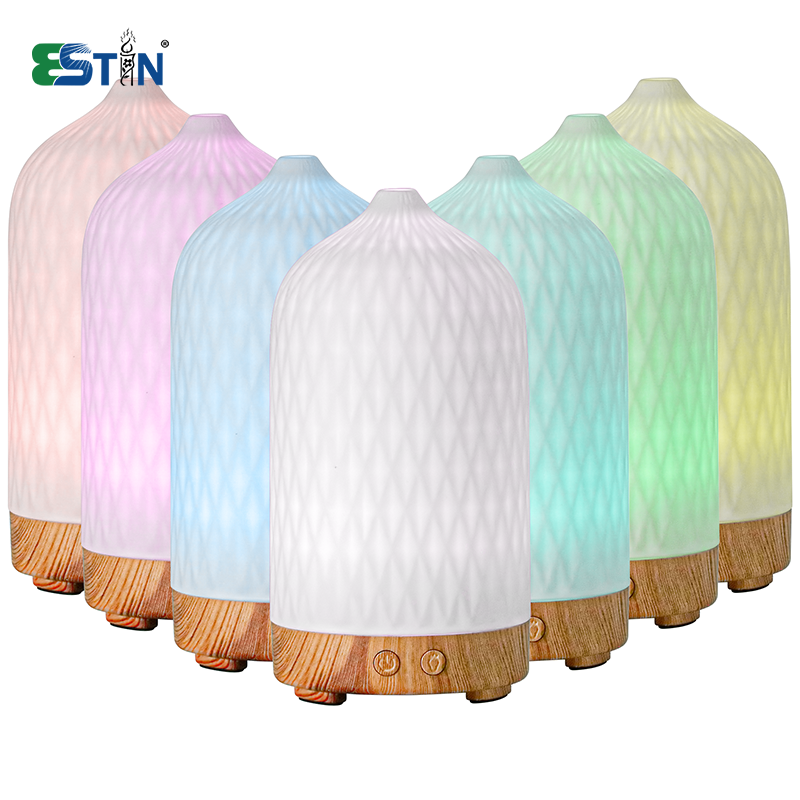
The primary anxiety for purchasing managers in overseas sourcing is inconsistent batch quality. A golden sample unit might perform perfectly in the boardroom. Yet, a subsequent bulk order of 5,000 units could arrive with a devastating failure rate. To mitigate this risk, buyers must audit the Standard Operating Procedures for quality assurance directly on the factory floor.
From an engineering perspective, there are four critical failure points that must be tested during the factory audit and sample evaluation phases:
Defect Category | Technical Cause | Engineering Verification Method |
|---|---|---|
Acoustic Resonance & Vibration | Low-quality air pumps or poor internal acoustic insulation vibrating against the outer housing. | Request decibel meter testing at a one-meter distance. Commercial units must operate under 35 decibels, which is considered whisper-quiet. |
Pressurized Oil Leakage | Inadequate silicone sealing rings or poorly threaded reservoir joints failing under air pressure. | Perform 48-hour continuous inversion and vibration testing. The internal Printed Circuit Board must remain completely dry. |
Internal Material Corrosion | Pure essential oils naturally dissolve standard ABS plastics over time, leading to structural failure. | Verify the Bill of Materials. Internal components must use high-grade glass, Polyoxymethylene, or anti-corrosive polymers. |
Micro-Nozzle Clogging | Atomizing tubes blocked by highly viscous essential oils such as heavy resins like Vetiver. | Check for built-in anti-clogging technology or easily removable, washable nozzle heads in the design schematic. |
Importing electronic devices with internal motors and power adapters requires strict adherence to international regulatory standards. If your diffusers lack the proper paperwork, they face immediate seizure at customs. This results in a total loss of inventory and massive project delays. A reputable manufacturer will have these certifications readily available for verification.
Specifically, verify that the diffuser models carry mandatory certifications for your target market. This includes CE and RoHS for the European Union, FCC for the United States, and UL or ETL listings. Even when a factory produces a premium aesthetic item like a Ceramic Aroma Diffuser with Rhombic Texture, the internal wiring and external power adapters must still meet these stringent regional electrical codes. This prevents fire hazards and protects your brand from liability.
Beyond product certifications, evaluate the ethical and operational standards of the facility itself. Request the latest ISO 9001 certificate to ensure standardized production processes. Additionally, Business Social Compliance Initiative audit reports are increasingly required by major global retailers before they agree to stock your products. This ensures the factory adheres to ethical labor practices.
A premium supplier should not merely sell a piece of hardware. They must act as a comprehensive scent marketing solutions provider. Commercial buyers, such as hotel procurement teams or corporate facility managers, require diffusers that integrate seamlessly into complex architectural environments.
Verify if the manufacturer provides scenario-based solutions. Current industry trends show that for large-scale commercial applications, standard standalone diffusers are rapidly becoming obsolete. Instead, the manufacturer must offer advanced systems capable of Heating, Ventilation, and Air Conditioning integration. These units connect directly to the building's ductwork. They utilize existing airflow to distribute scent evenly across thousands of square feet. The supplier should provide specialized connection tubes and built-in check valves to prevent air backflow.
For boutique retail or spa environments, standalone units are still highly preferred, but they must blend seamlessly with the interior decor. A supplier who understands how to match industrial performance with the elegant exterior of a Ceramic Aroma Diffuser with Rhombic Texture shows true market versatility. Always ensure the supplier provides accurate, empirically tested coverage area specifications. Accurate coverage data prevents the costly mistake of under-scenting or overpowering a commercial space.
Favorable commercial terms are just as critical as product quality. Buyers must engage in detailed negotiations regarding wholesale policies before investing time in prototype development.
Determine the supplier's flexibility regarding Minimum Order Quantities. Standard off-the-shelf models usually require a minimum order of 100 to 500 units. It is highly recommended to negotiate a smaller pilot run for initial market testing. In contrast, heavily customized projects requiring new tooling will naturally command higher volumes to offset setup costs. Ensure the supplier provides a highly transparent tiered pricing structure where unit costs decrease predictably as order volumes scale.
Assess their familiarity with international shipping terms. Most B2B transactions operate on Free On Board terms, meaning the factory handles local transport and export clearance. If your company lacks a dedicated freight forwarder, verify if the manufacturer can facilitate Delivered Duty Paid shipping to deliver the goods directly to your warehouse doors.
The aromatherapy and home fragrance market exhibits strong seasonality. Diffuser sales traditionally experience a massive surge in the third and fourth quarters. This is driven by drier indoor air during colder months, a heightened focus on respiratory wellness, and the peak holiday gifting season.
Buyers must verify if the manufacturer possesses the elastic production capacity to handle these peak-season rush orders. A factory that promises a short lead time in April might suddenly require double the time in October. If your holiday catalog features a highly customized product, such as a Ceramic Aroma Diffuser with Rhombic Texture, the longer lead times required for intricate kiln firing must be factored into your purchasing schedule. This ensures inventory arrives well before the holiday rush.
Equally important is the after-sales support structure. When dealing with bulk electronics, a marginal defect rate is standard. What truly matters is how the supplier handles these inevitable failures. Verify the exact terms of the warranty period. The industry standard is one to two years on core components like the pump and circuit board. Additionally, negotiate the inclusion of free spare parts with every bulk order. Receiving extra atomizing cores or replacement glass reservoirs allows your team to resolve minor customer issues locally without waiting weeks for international replacement shipments.
Finding a reliable nebulizer diffuser manufacturer requires rigorous research and a strategic approach. Purchasing managers must look far beyond the lowest wholesale price on a catalog page. It demands a careful audit of a factory's core technology, their quality control protocols against hidden defects, and their ability to execute complex manufacturing capabilities.
Use this comprehensive guide to fortify your sourcing strategy for the upcoming year. By prioritizing technical transparency and commercial expertise, you can build a resilient supply chain that protects your brand's reputation. If you are looking to elevate your product line with premium customizable options, explore the Ceramic Aroma Diffuser with Rhombic Texture and other cutting-edge designs. Contact a verified, industry-leading manufacturer at Estin Home today to request a physical sample and a detailed commercial quote.
Ultrasonic diffusers utilize water and high-frequency ultrasonic vibrations to create a diluted mist, which adds humidity to the air. Nebulizer diffusers use pressurized cold air to atomize pure essential oils into micro-particles without the addition of water or heat. This results in a much stronger, purer, and longer-lasting scent profile, making nebulizers the preferred choice for large commercial spaces and clinical aromatherapy applications.
Minimum order quantities vary significantly depending on the supplier's policies and the level of product customization. For standard models with basic logo printing, quantities typically range from 100 to 500 units. However, for heavily customized designs featuring proprietary shapes or specialized material molds, manufacturers generally require orders of 1,000 to 3,000 units to justify the initial engineering and machine setup costs.
The most crucial step is to always request a physical sample first. Subject this sample to rigorous in-house testing for motor decibel levels, atomization efficiency, and potential oil leaks over a multi-day period. Conduct a thorough vetting of their documentation by asking for ISO 9001 certifications and CE and RoHS compliance reports. Ideally, request a live video tour of their factory assembly lines and quality control testing rooms.
Yes, reputable manufacturers equipped with strong Original Design Manufacturing engineering teams can create highly customized molds, intricate textures, and premium material finishes. Working with materials like high-fired clay, tempered glass, or brushed aluminum requires advanced manufacturing techniques. Buyers should always ask to see previous examples of similar complex manufacturing work in the supplier's portfolio before committing to a custom project.
A high-quality commercial air pump should be rated for at least 3,000 to 5,000 hours of continuous operation. During the vetting process, buyers should ask the manufacturer for stress-test data and verify the type of motor used. Brushless DC motors generally offer the longest lifespan and quietest operation for continuous scenting environments.
Unlike water-based units that require daily wiping to prevent mold, waterless systems primarily need nozzle maintenance. Highly viscous essential oils can clog the microscopic atomizing tubes over time. It is recommended to run rubbing alcohol through the system for fifteen minutes every month to dissolve any residual resin and keep the micro-nozzles clear.


