+86-18925518708 leah@myerhw.com
- Product Name
- Product Keyword
- Product Model
- Product Summary
- Product Description
- Multi Field Search
 EnglishEnglish


Views: 0 Author: Site Editor Publish Time: 2026-07-31 Origin: Site


The application of essential oils has evolved from basic room scenting to targeted environmental management and physiological support, requiring precise delivery mechanisms. Consumers frequently mismatch their specific wellness or environmental goals with the wrong diffusion technology, resulting in degraded oil integrity, inadequate room coverage, or excessive maintenance overhead. To maximize the return on investment in both hardware and high-quality oils, buyers must evaluate Essential Oil Diffusers based on their primary use cases. This guide breaks down five distinct applications for home and body, detailing the technical specifications and hardware required for each. We will examine the mechanical differences between atomization methods, the impact of water quality on respiratory health, and the specific material requirements needed to handle highly volatile plant compounds safely.
Technology Dictates Efficacy: Nebulizing diffusers are mandatory for clinical-grade, undiluted therapeutic inhalation, while ultrasonic models are best for ambient scenting and light humidification.
Water Quality Impacts Health: Using tap water in ultrasonic diffusers aerosolizes minerals, creating "white dust" that degrades indoor air quality and risks respiratory irritation. Distilled water is a technical necessity.
Scalability Relies on Output Capacity: Effective home odor neutralization requires matching the diffuser’s milliliter-per-hour (ml/h) output and tank size to the exact square footage of the target environment.
Maintenance is a Hidden Cost: Water-based diffusers carry risks of mold and bacterial growth if not rigorously maintained, whereas waterless models require frequent cleaning to prevent resin clogs.
Material Integrity Matters: Only medical-grade glass, ceramic, or high-density BPA-free plastics (like Polypropylene/PP) should be used to prevent the breakdown of the unit by highly corrosive citrus or resinous oils.
Selecting the correct hardware starts with understanding the underlying mechanics of dispersion. Nebulizing technology operates on Bernoulli’s principle. A motorized pump forces pressurized air through a small tube, creating a vacuum that pulls the essential oil to the surface. A secondary stream of air blows across the top, atomizing the oil into micro-particles. This process uses zero water and zero heat, preserving the exact molecular integrity of the plant extract. It delivers a highly concentrated aroma suitable for therapeutic applications.
Ultrasonic technology relies on a small ceramic disc located at the base of a water reservoir. This disc vibrates at ultrasonic frequencies, typically around 2.4 million times per second. The rapid vibration breaks the essential oil and water mixture into a fine mist, which a small fan then blows into the room. This method adds light humidity to the environment but significantly dilutes the oil's potency. It works exceptionally well for general room scenting.
Evaporative and heat diffusers utilize fans or thermal elements to accelerate the natural evaporation of essential oils. Fan-based models blow air through a pad soaked in oil. Heat models warm the oil directly. We generally advise against thermal units for therapeutic use because heat alters the delicate chemical constituents of the oil, degrading its potential benefits and changing its aromatic profile.
Technology Type | Mechanism | Water Required | Therapeutic Potency | Best Application |
|---|---|---|---|---|
Nebulizing | Pressurized Air (Bernoulli) | No | Maximum | Clinical inhalation, large spaces |
Ultrasonic | High-frequency vibration | Yes | Moderate (Diluted) | Ambient scenting, light humidification |
Evaporative | Fan-assisted airflow | No | Low | Personal space, travel |
Heat | Thermal element | No | Degraded | Basic odor masking (Not recommended) |
Essential oils contain highly concentrated volatile organic compounds (VOCs). Citrus oils, for example, are rich in d-limonene, a powerful solvent that easily eats through standard plastics. Evaluating construction materials prevents hardware failure and chemical exposure. Medical-grade glass reservoirs offer the highest resistance to chemical degradation. They remain completely inert, ensuring no plasticizers leach into the air.
When glass is impractical due to fragility, high-density Polypropylene (PP) plastic provides a durable, shatterproof alternative. PP plastic resists the corrosive nature of most essential oils. You must always verify material specifications before purchasing. Using low-grade plastics risks chemical leaching, where the oil breaks down the reservoir walls, aerosolizing synthetic compounds alongside your chosen scent.
Ultrasonic models require strict water quality management. Using standard tap water introduces dissolved minerals, such as calcium and magnesium, into the mechanism. These minerals accelerate scale buildup on the ultrasonic disc, rapidly reducing vibration efficiency and shortening the unit's lifespan.
More importantly, the ultrasonic process aerosolizes these minerals, emitting them into the room as harmful airborne particulates. This phenomenon often appears as a fine white dust settling on furniture. Inhaling aerosolized minerals degrades indoor air quality and risks respiratory irritation. Utilizing distilled or demineralized water eliminates this risk, preserving respiratory health and extending hardware longevity. We consider distilled water a strict technical requirement for safe ultrasonic operation.
Essential oils vary wildly in thickness, classified generally into top, middle, and base notes. Viscosity directly affects diffusion efficiency, particularly in waterless systems. Top notes like lemon or peppermint are thin and vaporize quickly. Base notes like vetiver, patchouli, and sandalwood are thick, heavy, and resinous.
Thick oils easily clog the delicate glass micro-tubes in nebulizers. If you plan to diffuse heavy resins, you must blend them with thinner top notes to reduce the overall viscosity. Furthermore, you should never use carrier oils, such as jojoba, fractionated coconut, or sweet almond oil, in any mechanical diffuser. Carrier oils are heavy, non-volatile fatty acids that will permanently ruin ultrasonic discs and clog nebulizer pumps.
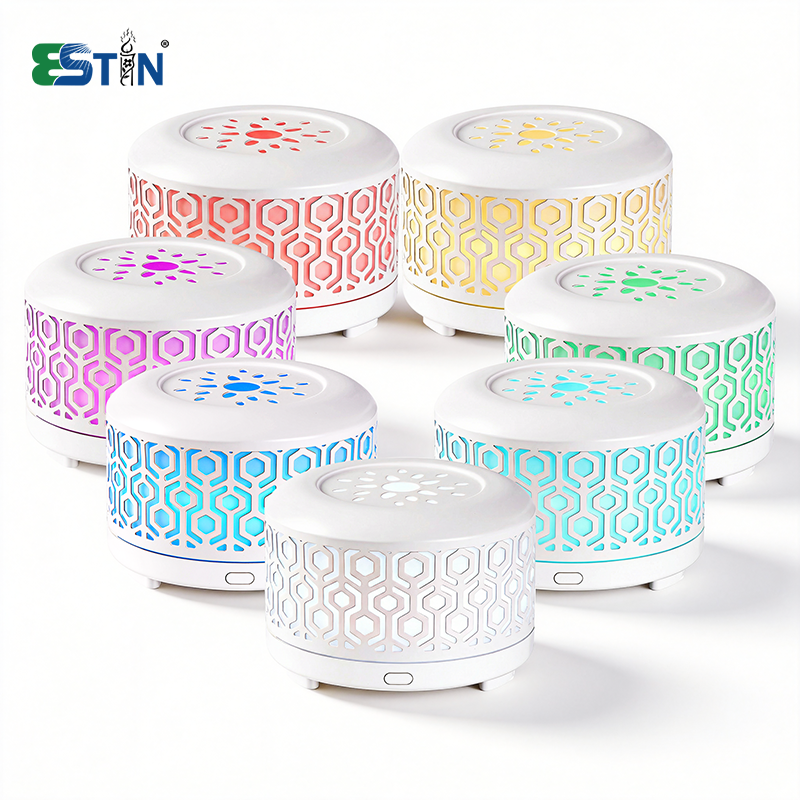
Whole-room scenting requires specific hardware capabilities to ensure the aroma reaches all corners of the space without overwhelming the immediate area. You must evaluate tank capacities, which typically range from 300ml to 1000ml for home use, to support continuous run-time capabilities. A 100ml tank will run dry in a few hours, making it useless for all-day odor management in a living room.
Atomization rates must be high enough to neutralize airborne pathogens or strong household odors, such as cooking smells or pet dander. Dosing mathematics dictate a precise oil-to-water ratio to optimize scent dispersion without causing olfactory fatigue. A standard baseline is 3 to 5 drops of pure essential oil per 100ml of water. For a 500ml tank, you would use 15 to 25 drops. Adjust this based on the specific oil's intensity; peppermint requires fewer drops than sweet orange.
Large-tank ultrasonic models offer the best cost-to-coverage ratio for open-concept living spaces. They provide sustained output for extended periods, often running for 10 to 14 hours on a single fill. When selecting a unit for this use case, look for specific feature requirements.
Adjustable mist output settings (high/low modes) to control the dispersion rate based on room size.
Directional nozzles to target the mist away from walls, electronics, or sensitive furniture.
Large water reservoirs (500ml+) to minimize refill frequency during daily operation.
Timer functions to allow for automated shut-off after specific intervals.
Deploying a diffuser in a bedroom requires strict adherence to acoustic and operational limits. Sub-30 decibel (dB) operation is necessary to prevent sleep disruption. Many nebulizers produce a distinct humming sound from the air pump, making them unsuitable for light sleepers. Ultrasonic models generally operate much quieter, producing only a faint water trickling sound.
Continuous diffusion during sleep is counterproductive. The human olfactory system quickly adapts to constant smells, leading to olfactory fatigue. More importantly, continuous exposure to VOCs overnight can cause headaches or respiratory irritation. Programmable intermittent timers are required. A setting of 10 minutes on and 20 minutes off provides consistent therapeutic benefits without overwhelming the system. Balancing moisture output also maintains relative humidity (RH) within the optimal 30% to 50% range, supporting mucosal membranes throughout the night.
Ultrasonic diffusers equipped with auto-shutoff safety features and display-light blackout modes are ideal for sleep environments. The blackout mode is critical; bright LED lights disrupt melatonin production. These units provide micro-humidification, offering dual benefits for nocturnal respiratory and mucous membrane support, especially during dry winter months or in air-conditioned rooms.
Home offices demand localized, low-output diffusion. You want to enhance your own focus without disturbing co-workers in adjacent rooms or damaging nearby computer monitors and keyboards. Power requirements often dictate the choice here. USB-C compatibility, battery operation, and compact footprints allow you to place the unit directly on a desk without managing bulky AC adapters.
The goal is micro-dosing. You need just enough aroma, perhaps rosemary or peppermint, to stimulate cognitive function without saturating the entire room. High-output ultrasonic models push too much moisture into the air, creating a risk for sensitive electronics and paper documents.
Waterless atomizers that screw directly onto standard 10ml or 15ml essential oil bottles offer distinct advantages for desk use. They eliminate water-spill risks entirely. You can knock them over without ruining a laptop. The trade-off involves higher oil consumption rates compared to ultrasonic models, as they pull pure oil directly from the bottle.
Passive diffusers provide a low-tech alternative for subtle, localized scenting. These include porous ceramic stones, reed diffusers, or untreated wood blocks. You apply a few drops directly to the material, and it evaporates slowly over hours. They require zero power and pose zero risk to electronics.
Environmental moisture levels directly impact the skin's ability to absorb topically applied carrier oils and serums. Applying skincare products in a dry room reduces their efficacy. Evaluating the output of moisture alongside aromatic benefits is essential for this use case. You want a device that acts primarily as a localized humidifier while delivering skin-supporting botanicals like lavender or geranium.
Establishing a safe operational distance is critical. You must maintain a minimum of 3 feet between the mist output and your face. This prevents thermal or concentrated chemical sensitization. Directing concentrated essential oil mist directly onto the face can cause contact dermatitis or eye irritation.
Units with high water-to-oil ratios prioritize epidermal hydration. These hybrids support the skin barrier by increasing local humidity in the bathroom or vanity area. We strongly discourage using nebulizers for this use case. Nebulizers provide zero humidification and deliver highly concentrated oils that may irritate sensitive facial skin if operated at close range.
Clinical applications, such as managing acute respiratory congestion or severe stress responses, require delivering a high concentration of unaltered essential oil molecules directly to the olfactory bulb and limbic system. Avoiding heat or water dilution is critical. Dilution alters the therapeutic profile of complex oils like frankincense, helichrysum, and sandalwood.
When you need maximum potency, water-based systems fall short. The water acts as a barrier, and the ultrasonic vibration can slightly alter the oil's structure. You need a system that takes the pure plant extract and breaks it down into nanoparticles small enough to remain suspended in the air for hours, maximizing inhalation potential.
Nebulizers stand as the industry standard for clinical aromatherapy. They deliver pure, undiluted oil particles. Users must evaluate the trade-offs before investing in this technology. Nebulizers carry higher upfront hardware costs due to the specialized glass components and motorized pumps. They produce increased noise levels, and they consume oil rapidly. A 15ml bottle might last months in an ultrasonic unit but only weeks in a nebulizer. Despite these factors, nebulizers offer unparalleled therapeutic efficacy for serious applications.
Neglecting maintenance destroys diffusers and creates health hazards. Ultrasonic maintenance requires strict adherence to a cleaning schedule. You must perform daily water changes. Leaving stagnant water in the reservoir invites bacterial growth. Weekly deep cleans are mandatory to prevent biofilm and mold.
Unplug the unit and empty any remaining water.
Fill the reservoir halfway with clean water and add one teaspoon of white vinegar.
Run the unit for 5 minutes to allow the vinegar to break down mineral scale.
Empty the reservoir and use a cotton swab dipped in isopropyl alcohol to gently clean the ultrasonic disc.
Rinse with clean water and wipe completely dry with a microfiber cloth.
Nebulizer maintenance carries different challenges. The primary risk is micro-tube clogging from heavy, resinous oils. If you leave oil in the glass reservoir for weeks, it will oxidize, thicken, and block the airflow. Required solvent flushes keep the nebulizing mechanism clear. To clean a nebulizer, pour a few milliliters of 90% isopropyl alcohol into the glass chamber and run the unit for 10 minutes in a well-ventilated area. This dissolves the resin buildup.
Evaluating toxicity thresholds is vital for safe operation. Continuous diffusion poses severe risks to household pets. Cats and dogs lack specific liver enzymes, such as glucuronyl transferase, required to process certain phenols and ketones found in essential oils. Oils like tea tree, eucalyptus, and citrus can cause neurological damage or liver failure in pets if diffused in unventilated spaces.
Operational parameters must also account for vulnerable human populations. You should avoid diffusing strong oils around infants under six months, pregnant or lactating individuals, and those diagnosed with reactive airway diseases like Asthma or COPD. Proper ventilation prevents indoor air quality degradation from excessive VOC accumulation. Always leave a door open when running a diffuser to allow for air exchange.
Audit the square footage of the target room to determine the required output capacity before making a purchase. Determine your primary goal, whether it is ambient aromatic scenting or targeted therapeutic delivery, to choose between ultrasonic and nebulizing technologies. Verify that shortlisted units utilize medical-grade glass or high-density PP plastic to ensure chemical safety. Establish a strict maintenance schedule based on the chosen technology to ensure hardware longevity and protect indoor air quality. Finally, always source pure, unadulterated essential oils to maximize the performance of your chosen hardware.
A: Nebulizers use pressurized air to deliver undiluted oil particles, preserving maximum potency without water or heat. Ultrasonic models use electronic frequencies and water to create a diluted mist, adding light humidity to the room while dispersing a milder scent.
A: Auto-shutoff features and intermittent timers are necessary for overnight use. Continuous diffusion causes olfactory fatigue and excessive VOC exposure, which can lead to headaches. Always use a timer setting, such as 10 minutes on and 20 minutes off.
A: Empty water daily and wipe down the reservoir after each use. Perform a deep clean with isopropyl alcohol or white vinegar every 5 to 7 uses to prevent mold buildup in ultrasonic models and resin clogs in nebulizers.
A: Yes. Moisture accumulation from ultrasonic models can damage nearby electronics and warp paper. Undiluted oils from nebulizers can settle on and permanently corrode varnished wood, painted surfaces, or plastic computer casings.
A: Nebulizing diffusers consume oil significantly faster than ultrasonic models because they do not use water as a carrier or diluent. They pull pure essential oil directly from the bottle or glass reservoir to create the aromatic mist.
A: Yes. High heat alters the delicate chemical constituents of essential oils, degrading their therapeutic value and changing their natural scent profile. Cold-air nebulizers or ultrasonic diffusers are the preferred choices for maintaining therapeutic integrity.


