+86-18925518708 leah@myerhw.com
- Product Name
- Product Keyword
- Product Model
- Product Summary
- Product Description
- Multi Field Search
 EnglishEnglish


Views: 0 Author: Site Editor Publish Time: 2026-07-23 Origin: Site


The adoption of environmental scenting and aromatherapy has transitioned from niche wellness practices to standard environmental management in homes and commercial spaces. Facility managers and homeowners alike now recognize the impact of ambient scent on mood regulation and localized odor control. However, navigating the hardware options requires looking past aesthetic designs to understand the mechanical dispersion methods at play. Buyers face a saturated market filled with exaggerated health claims, making it difficult to separate verifiable benefits from marketing fluff, and to choose the right diffusion technology for specific spatial requirements. You need to match the device's output capacity to your room's square footage while factoring in daily maintenance demands. To make an informed purchasing decision, buyers must evaluate Essential Oil Diffusers based on scientifically supported outcomes, underlying dispersion technology, and strict safety considerations.
Outcome-Driven Selection: The primary verifiable benefits of essential oil diffusers center on olfactory stimulation (mood/focus enhancement) and localized odor management, rather than clinical air purification.
Technology Trade-offs: Ultrasonic models offer dual-purpose humidification and are cost-effective, while nebulizing models provide concentrated scent dispersion suitable for larger spaces without adding moisture.
Maintenance is Mandatory: Long-term success and device longevity require strict adherence to cleaning protocols to prevent mold growth and lipid degradation of device components.
Safety Variables: Implementation must account for the presence of pets, children, and individuals with respiratory sensitivities, as certain volatile organic compounds (VOCs) in oils can trigger adverse reactions.
The primary mechanism of action for environmental scenting involves the dispersion of volatile aromatic compounds to neutralize or mask ambient odors. This process alters the perceived scent profile of a room without relying on heavy synthetic chemicals. When you introduce concentrated plant extracts into the air, the volatile molecules bind with olfactory receptors, effectively changing how the environment smells. It provides a straightforward method for managing environmental odors in residential spaces, lobbies, and waiting areas.
Compared to synthetic air fresheners, using natural oils reduces exposure to phthalates, formaldehyde, and synthetic propellants. Aerosol sprays and plug-in fresheners often rely on chemical binders to keep scents suspended in the air. These binders contribute to indoor air pollution. Shifting toward mechanical dispersion of pure plant oils appeals to health-conscious users looking to minimize indoor chemical loads while still achieving a pleasant atmospheric profile.
Success criteria for odor management include achieving consistent scent distribution without overwhelming the cubic footage of the room. Proper scaling ensures the aroma remains pleasant and effective rather than overpowering. If you run a high-output device in a small bathroom, the concentration of volatile organic compounds will quickly cause headaches and olfactory fatigue. You must calibrate the output settings to match the airflow and dimensions of the specific room.
Evidence-based realities show how the olfactory bulb interacts directly with the limbic system to influence stress levels and perceived focus. The limbic system controls emotions, behavior, and long-term memory. When you inhale specific scents, the brain processes these signals instantly, often resulting in subtle shifts in mood or alertness. This biological pathway explains why certain aromas trigger immediate physical or emotional responses.
It is important to maintain realistic expectations by differentiating between subjective mood enhancement and unsupported medical claims. While lavender may promote relaxation and peppermint might enhance alertness, these effects are supportive rather than curative. You cannot treat clinical anxiety or ADHD with scent alone. Instead, use these devices to create an environment conducive to your desired mental state.
Practical applications for cognitive support require targeted oil selection based on the room's function. Consider the following implementations:
Home offices: Diffusing rosemary or peppermint to combat afternoon fatigue and maintain focus during complex tasks.
Bedrooms: Utilizing chamomile, cedarwood, or lavender thirty minutes before sleep to establish a calming nighttime routine.
Living areas: Blending sweet orange and bergamot to create an uplifting, welcoming atmosphere for guests.
Workout spaces: Using eucalyptus or lemon to keep the environment feeling fresh and energetic during physical exertion.
Ultrasonic models play a role in providing micro-humidification to dry indoor environments. This slight increase in moisture can make a room feel more comfortable, especially during winter months when indoor heating dries out the air. The vibrating disc inside the unit breaks water into a fine mist, adding a small but measurable amount of humidity to the immediate vicinity of the device.
Regarding aerosolization safety, the physiological impact of micro-droplet inhalation on respiratory comfort varies among individuals. Most users find the fine mist soothing, provided the device is kept clean and operated within recommended parameters. Stagnant water left in the reservoir can breed bacteria, which the device will then aerosolize into the room. Daily water changes are non-negotiable for respiratory safety.
It is vital to understand the limitations of these devices. They are not replacements for dedicated HEPA air purifiers or clinical-grade humidifiers. Their primary function remains scent dispersion, with humidification acting as a secondary, minor benefit. If your home suffers from severe dry air, you need a dedicated evaporative humidifier. If you need to remove dust and dander, you need a mechanical filter.
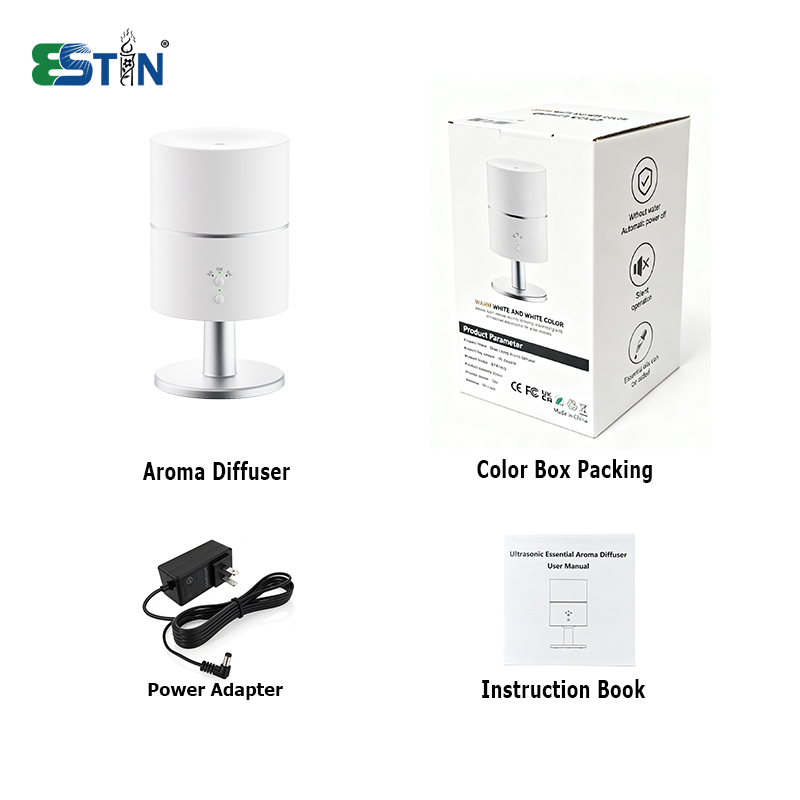
This mechanism uses high-frequency electronic frequencies to vibrate a small piezoelectric disk under the water, creating a fine mist of water and essential oils. The rapid vibration, usually around 2.4 million times per second, breaks the liquid into microscopic particles that are easily dispersed into the air. Because it relies on water as a carrier, the scent is inherently diluted.
The pros of this technology include being highly accessible, doubling as a light humidifier, and using less essential oil per hour compared to other methods. You only need 5 to 10 drops of oil for a full tank of water. This makes them highly popular for everyday residential use where subtle scenting is preferred over intense aroma.
However, the cons involve requiring a nearby water source and adding humidity, which may be undesirable in already damp climates. The acoustic profile features low operational noise, typically under 26–30 dB, punctuated by occasional water-dripping sounds. Some users find the trickling water sound relaxing, while others find it distracting in a quiet office setting.
Comparison of Dispersion Technologies | ||||
Technology Type | Carrier Medium | Scent Intensity | Ideal Room Size | Maintenance Level |
|---|---|---|---|---|
Ultrasonic | Water | Mild to Moderate | 100 - 300 sq. ft. | High (Daily water changes) |
Nebulizing | Pressurized Air | Strong / Concentrated | 400 - 1000+ sq. ft. | Moderate (Weekly tube cleaning) |
Evaporative | Airflow (Fan) | Weak to Mild | Under 100 sq. ft. | Low (Pad replacement) |
Heat | Thermal Energy | Variable | Under 100 sq. ft. | Low (Wipe down dish) |
This mechanism utilizes pressurized air and the Bernoulli principle to atomize pure essential oils into micro-particles. It forces air through a small tube, creating a vacuum that pulls the oil up from the reservoir and blows it against a glass baffle. This shatters the oil into a fine, waterless mist that disperses rapidly throughout the room.
The pros include delivering the most concentrated aroma, covering larger square footage, and altering neither the chemical composition of the oil nor the room's humidity. Because there is no water to dilute the mixture, the scent profile remains robust and true to the original plant extract. This makes nebulizers ideal for large open-concept living spaces or areas with high ceilings.
The cons center on consuming essential oils at a significantly faster rate and operational noise. You are vaporizing pure oil, so a 15ml bottle will deplete much faster than it would in a water-based unit. The motor hum usually ranges from 35–45 dB, which might be noticeable in quiet environments like a bedroom at night.
This mechanism uses a fan to blow air through a filter or pad soaked in oil, or uses gentle heat to evaporate the oil from a ceramic dish. These methods rely on natural or forced evaporation to release the scent into the surrounding area. They are mechanically simple and rarely break down.
Evaluation generally considers these as legacy or suboptimal technologies for therapeutic use. Heat can alter the chemical profile of the oil, degrading its quality and destroying the volatile compounds that provide olfactory benefits. Evaporative models often offer poor spatial coverage and inconsistent scent delivery, as the lighter top notes of the oil evaporate quickly, leaving the heavier base notes trapped in the pad.
Matching device output to room size is critical for effective scenting. If you place a small unit in a massive room, the scent will dissipate before it reaches you. Standard ultrasonic models typically cover 100-150 sq. ft., making them suitable for bathrooms and small bedrooms. High-capacity ultrasonic or nebulizer models can handle 300-500+ sq. ft. effectively.
Evaluating mist output rates, usually measured in ml/hour, serves as a reliable metric for spatial coverage. Higher output rates generally correlate with the ability to scent larger areas more rapidly. When reviewing specifications, look for units that offer adjustable output settings so you can throttle the mist down if the room feels overwhelmed.
The choice between distilled and tap water impacts device performance and indoor air quality. Using tap water carries the risk of "white dust," which is the ultrasonic aerosolization of tap water minerals. When the water evaporates in the air, the calcium and magnesium fall to the ground, leaving a fine white powder on your furniture and potentially impacting indoor PM2.5 levels.
Device scaling is another major concern. Hard water accelerates scale buildup on piezoelectric discs. This mineral crust insulates the disc, preventing it from vibrating the water effectively. This diminishes the device's efficiency and shortens its operational lifespan. Using distilled or reverse-osmosis water eliminates this problem entirely.
Evaluating plastic components is necessary because essential oils, particularly citrus oils containing d-limonene, act as powerful solvents. They will eat through cheap plastics over time. Look for medical-grade, BPA-free, and corrosion-resistant plastics like PP (polypropylene) for the water reservoir to withstand the solvent nature of heavy oils.
Alternatives include glass, ceramic, and sustainably sourced wood housings. These materials offer better aesthetic integration and superior chemical resistance compared to standard plastics. A glass nebulizer, for example, will never degrade from oil exposure, though it requires careful handling to prevent breakage.
Timer settings and intermittent diffusion cycles are essential for preventing sensory adaptation and olfactory fatigue. The human nose quickly stops registering a scent if exposed to it continuously. Features that allow the device to run in bursts—such as 10 minutes on, 10 minutes off—maintain scent perception over longer periods without wasting oil.
Auto-shutoff mechanisms, usually triggered by water-level sensors, provide necessary fire safety and motor protection. If a unit runs dry, the ultrasonic disc can overheat and fail. Ambient lighting controls, including the ability to disable LEDs completely, are crucial for devices used in sleep environments where light pollution disrupts circadian rhythms.
Verifying regulatory compliance ensures the device meets basic safety requirements. You are dealing with water and electricity in close proximity. Seek out ETL, CE, FCC, or RoHS certifications to ensure electrical safety and build integrity before making a purchase. Uncertified, cheap imports pose a legitimate fire hazard if the internal wiring shorts out due to moisture exposure.
Toxicity risks must be carefully managed when introducing volatile compounds into a shared environment. Animals process enzymes differently than humans. Identify oils that are highly toxic to felines and canines, such as eucalyptus, tea tree, citrus, peppermint, and wintergreen, and avoid using them around pets. Cats are particularly vulnerable to liver damage from aerosolized essential oils.
Mitigation strategies include ensuring diffusers are placed out of reach of children and pets to prevent accidental ingestion or spills. Always operate them in well-ventilated areas with open doors to allow pets to exit if the scent becomes overwhelming. Never lock an animal in a room where a device is actively running.
Understand the difference between low-viscosity oils like citrus and lavender, and high-viscosity or resinous oils like vetiver, patchouli, and sandalwood. The thickness of the oil dictates how well it will diffuse. Thin oils vaporize instantly and leave very little residue behind.
Clogging dynamics vary by technology. Thick oils can form a heavy lipid barrier over ultrasonic plates, smothering the vibration. In nebulizing diffusers, resinous oils easily clog the delicate glass micro-tubes, requiring intensive cleaning with high-proof alcohol to dissolve the blockage. If you plan to use heavy base notes, you must commit to a stricter maintenance schedule.
The reality of lipid buildup means residual oil degrades ultrasonic plates and clogs nebulizer micro-tubes over time. Ignoring maintenance leads directly to poor performance, weak mist output, and eventual device failure. You cannot simply keep adding water and oil to a dirty tank.
Follow these exact steps for standard operating procedure and deep cleaning:
Unplug the unit and empty any remaining water from the rear of the device to avoid the air intake vent.
Wipe the inside of the reservoir with a dry microfiber cloth after every single use to remove the lipid film.
Once a week, fill the reservoir halfway with clean water and add one teaspoon of pure white vinegar.
Run the device for five minutes in a well-ventilated area to allow the vinegar to descale the internal components.
Empty the vinegar solution, dip a cotton swab in rubbing alcohol, and gently clean the ultrasonic disc at the bottom of the tank.
Rinse with clean water, wipe dry, and leave the lid off to air dry completely before the next use.
Measure the square footage of your target room accurately to ensure you select a device with adequate output capacity.
Determine your preferred dispersion technology based on whether you need subtle scenting with light humidification or concentrated, waterless aroma.
Verify the material build quality, ensuring the reservoir uses high-grade polypropylene or glass to resist solvent degradation.
Commit to a strict weekly cleaning schedule using vinegar or isopropyl alcohol to maintain device efficiency and prevent mineral scale.
A: No. While some essential oils have antimicrobial properties in liquid form, diffusing them does not clinically purify indoor air or remove particulate matter like a HEPA filter does.
A: Humidifiers are designed specifically to output large volumes of water to raise room humidity. Diffusers are designed to disperse scent; while ultrasonic diffusers release some moisture, their output is generally too low to significantly alter a room's humidity levels.
A: While tap water can be used in most models, distilled water is highly recommended. Tap water contains minerals that can create a white mineral dust and accelerate scale buildup on the ultrasonic transducer, reducing the device's lifespan.
A: Thick, resinous oils do not atomize as easily as thin, volatile oils. In nebulizers, they can easily clog micro-tubes, and in ultrasonic diffusers, they can form a heavy lipid barrier over the vibrating plate, restricting mist production.
A: For optimal performance and device longevity, empty and wipe down the reservoir after every use, and perform a deep clean with vinegar or rubbing alcohol every 3 to 6 uses to prevent oil residue buildup.
A: It is generally safe if the device features an automatic shut-off mechanism when empty. However, continuous diffusion can cause olfactory fatigue; using an intermittent timer setting is recommended for overnight use.


