+86-18925518708 leah@myerhw.com
- Product Name
- Product Keyword
- Product Model
- Product Summary
- Product Description
- Multi Field Search
 EnglishEnglish


Views: 0 Author: Site Editor Publish Time: 2026-07-29 Origin: Site


Public perception of aromatherapy is deeply divided. On one side, you find exaggerated claims of miracle cures; on the other, complete skepticism. The wellness market is saturated with conflicting information, leaving consumers confused. If you want to use aromatherapy for stress relief, better sleep, or improved focus, you need objective, peer-reviewed evidence before investing in hardware and consumables. The efficacy of essential oils is inextricably linked to their delivery mechanism. You cannot separate the oil from how it gets into your system. We must evaluate Essential Oil Diffusers not just as simple home fragrance devices, but as functional tools for targeted inhalation therapy. Understanding the science behind these devices is the first step toward actual results.
Clinical Reality: Peer-reviewed studies support the use of specific essential oils for psychological and mild physiological benefits (e.g., anxiety reduction, sleep hygiene, autonomic nervous system modulation), but reject claims of curing systemic diseases.
Delivery Matters: Inhalation via olfactory receptors is the most scientifically validated pathway for neurological impact, making the choice of diffusion method critical to the outcome.
Technology Trade-offs: The effectiveness of essential oil diffusers varies significantly by type; nebulizing and cold-air technologies offer the highest therapeutic concentration, while ultrasonic models provide a balance of scent and mild humidification.
Safety and Mitigation: Safe implementation requires strict adherence to dilution guidelines, awareness of indoor air quality (VOCs/SOAs), and specific precautions regarding pets, children, and respiratory conditions.
The biological pathway of inhalation is direct and measurable. Volatile organic compounds (VOCs) in the oils travel through the nasal cavity and bind to olfactory receptors. These receptors transmit signals directly to the brain's limbic system via the olfactory bulb. The limbic system controls emotion, memory, and autonomic functions like heart rate and breathing. This direct connection explains why scent can trigger immediate physiological responses without passing through the digestive system or bloodstream first.
We must differentiate between psychological effects and physiological biomarkers. Psychological effects involve mood alteration, such as feeling calmer or more alert. Physiological biomarkers are measurable changes in the body. Studies have documented cortisol reduction, Heart Rate Variability (HRV) modulation, and EEG brain wave alterations following specific essential oil inhalation. When you inhale a compound like linalool, your brain chemistry physically responds, altering your autonomic nervous system's state from sympathetic (fight or flight) to parasympathetic (rest and digest).
Understanding this mechanism is critical for setting realistic expectations. You are not inhaling magic; you are inhaling complex organic chemistry that interacts with your neurological hardware. The effectiveness of this interaction depends entirely on the concentration and quality of the compounds reaching your olfactory bulb.
Evidence-backed clinical use cases exist for several common oils. Lavender (Lavandula angustifolia) shows positive results for reducing sleep latency and managing pre-operative anxiety. Peppermint (Mentha piperita) demonstrates efficacy for cognitive performance enhancement and tension headache relief. Sweet Orange (Citrus sinensis) has been linked to salivary cortisol reduction in stressful environments. These are not anecdotal claims; they are documented outcomes in controlled environments.
The placebo effect plays a role, but subjective benefits remain valid in clinical psychology. Open-label studies have limitations, yet the reported improvements in well-being are significant for the users. If a patient reports feeling less anxious after inhaling bergamot, the psychological relief is real, even if the exact biochemical pathway is still being mapped. However, we must debunk exaggerated claims. Essential oils cannot cure viruses, bacterial infections, or chronic systemic illnesses. Relying on them for serious medical conditions is dangerous and unscientific.
Furthermore, the term "therapeutic grade" is a marketing myth. It is not recognized or regulated by the FDA or any governing scientific body. Companies use this term to justify higher costs, but it holds no clinical weight. The only true measure of an oil's quality is its chemical profile, verified through independent laboratory testing.
Inhalation is vastly superior to topical application and ingestion for neurological effects. Ingestion carries severe systemic safety risks, bypasses liver metabolism unpredictably, and offers low bioavailability. Topical application requires heavy dilution and is absorbed slowly through the dermal layers. Inhalation delivers active compounds directly to the olfactory system, providing the fastest route to the brain.
The physics of particle size dictate absorption efficiency. Aerosolizing oils into micro-droplets (0.5 to 5 microns) maximizes the surface area of the volatile compounds. This specific size range allows for optimal olfactory absorption and safe respiratory inhalation without overwhelming the lungs. If the particles are too large, they fall to the ground quickly. If they are too small, they may penetrate too deeply into the respiratory tract. Proper diffusion equipment ensures the correct particle size for therapeutic use.
When you use a high-quality device, you are controlling the physics of the oil. You are transforming a dense liquid into a breathable vapor that can interact with your neurobiology. This is why the hardware you choose is just as important as the oil itself.
Passive diffusion relies on natural evaporation. Reed diffusers, porous stones, and heat pads fall into this category. They are suitable for localized scenting but insufficient for therapeutic room saturation. Lighter molecular compounds evaporate quickly, while heavier ones linger, resulting in an uneven therapeutic profile. You might smell the top notes of an oil blend, but the heavier base notes remain trapped in the liquid.
Active diffusion requires electronic devices. These devices are the necessary standard for achieving clinically relevant, consistent concentrations in a given space. They force the oil into the air, ensuring a balanced distribution of all volatile compounds. Whether through ultrasonic vibration or pressurized air, active diffusion guarantees that the entire chemical profile of the oil is aerosolized simultaneously.
For any serious application of aromatherapy, active diffusion is mandatory. Passive methods are fine for making a bathroom smell pleasant, but they will not deliver the consistent VOC concentration required to modulate HRV or reduce sleep latency.
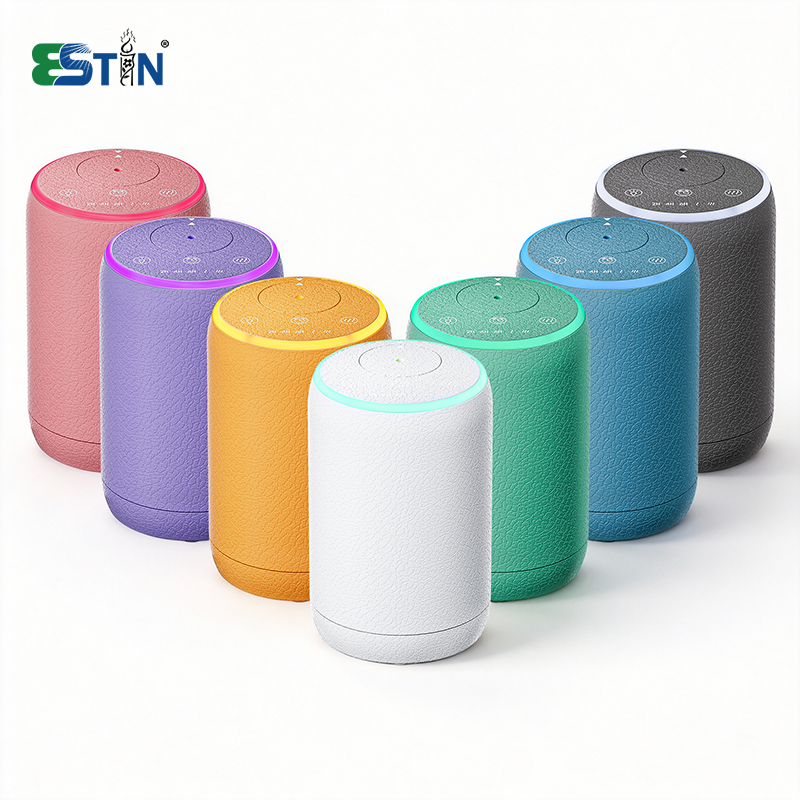
Ultrasonic diffusers use electronic frequencies to create ultrasonic vibrations in a water reservoir. These vibrations break the water and essential oil into a fine mist, which is then blown into the room by a small fan. This is the most common technology found in residential settings.
The primary advantage is dilution, making it safer for prolonged exposure. They add mild humidity to dry air, operate quietly, and are generally cost-effective. However, they provide a less concentrated therapeutic effect because the oil is heavily diluted with water. They require regular water refills and rigorous cleaning to prevent mold growth inside the damp reservoir. Additionally, they can aerosolize tap water minerals, creating a fine white dust on your furniture.
For daily, ambient use, ultrasonic models are highly practical. They offer a gentle introduction to aromatherapy and double as a minor humidifier during dry winter months.
Nebulizing diffusers use pressurized air currents based on Bernoulli's principle. They atomize pure, undiluted essential oil into a fine vapor without using water or heat. A small air pump forces air through a narrow tube, creating a vacuum that pulls the oil up and shatters it against a glass surface into micro-particles.
This method delivers the maximum concentration of active volatile organic compounds. It is ideal for large spaces and acute, short-term therapeutic sessions where immediate impact is required. The downsides include rapid oil consumption, a higher upfront cost, and louder mechanical pump operation. They can easily over-saturate small spaces if not monitored carefully.
If your goal is clinical-level intervention for acute stress or severe sleep issues, a nebulizer provides the necessary potency. Just be prepared for the higher operational costs associated with burning through pure oil.
Cold-air diffusers use ultra-high-pressure gas liquid chromatography-style dispersion. This technology suspends nano-particles in the air over vast areas without heat or water. It is the technology used in high-end hotels and commercial spaces.
They offer ultimate consistency in scent distribution and leave zero residue. Many models are HVAC-compatible, allowing you to pipe the scent directly into your ductwork for whole-building coverage. The main drawback is the premium price point. They are designed primarily for commercial applications or luxury residential installations.
While overkill for a single bedroom, cold-air technology represents the pinnacle of diffusion science, offering unmatched control over indoor scent environments.
Evaporative diffusers use fans, and heat diffusers use direct heat sources to accelerate oil evaporation from a pad or bowl. These are older, less sophisticated methods of dispersing scent.
Heat alters the chemical composition of the oil. It causes thermal degradation of delicate therapeutic constituents, such as monoterpenes. Because they destroy the very compounds you are trying to inhale, these devices are sub-optimal for evidence-based aromatherapy. Evaporative fan models do not use heat, but they still suffer from uneven evaporation rates, leaving heavier compounds behind on the pad.
Avoid heat-based systems entirely if you are seeking therapeutic benefits. They are strictly for rudimentary home fragrancing.
Diffuser Technology | Mechanism | Therapeutic Potency | Best Use Case |
|---|---|---|---|
Ultrasonic | Water + Vibration | Low to Medium | Daily ambient use, mild humidification |
Nebulizing | Pressurized Air (No Water) | High | Acute therapy, large rooms |
Cold-Air | High-Pressure Nano-Dispersion | High | Commercial spaces, HVAC integration |
Heat/Evaporative | Thermal or Fan Evaporation | Very Low (Degrades Oil) | Basic scenting (Not recommended) |
You must match the diffuser output (ml/hour) and airflow capacity to your room's square footage. A small ultrasonic unit in a large living room will under-saturate the space, rendering it ineffective. Conversely, a powerful nebulizer in a small bathroom will quickly over-saturate the air, potentially causing headaches or respiratory irritation.
Measure the square footage of your target room.
Check the manufacturer's coverage rating (usually listed in square feet or square meters).
For high ceilings or open floor plans, size up your device to account for the increased cubic volume of air.
If using a nebulizer, ensure it has adjustable output dials to throttle the intensity in smaller spaces.
Pure essential oils are highly corrosive. Citrus oils, containing high levels of d-limonene, will rapidly degrade cheap plastics. If you put pure lemon oil in a low-grade plastic reservoir, it will eat through the material within weeks.
Look for medical-grade plastics (BPA-free, PP/polypropylene materials), glass, or wood reservoirs. These materials ensure longevity and prevent harmful chemical leaching into your air. Polypropylene (PP) is highly resistant to the solvent properties of essential oils and is the standard for quality ultrasonic units. Nebulizers typically use glass reservoirs, which are completely inert and safe.
Mineral aerosolization is a real concern with ultrasonic models. Using hard tap water releases PM2.5 particulate matter (minerals) into the indoor air, which you then breathe. This is the source of the white dust often found around humidifiers and diffusers.
Distilled water is the clinically preferred medium to prevent this white dust and maintain healthy indoor air quality. Reverse osmosis water is an acceptable alternative. Never use well water or hard municipal tap water if you want to protect your respiratory health and keep your furniture clean.
Olfactory fatigue, or sensory adaptation, occurs when your nose stops registering a scent after continuous exposure. You might think the device stopped working, but your brain has simply tuned out the stimulus. Prolonged exposure also increases the risk of systemic toxicity and headaches.
Programmable timers, auto-shutoff safety switches, and intermittent misting features (e.g., 30 minutes on, 30 minutes off) are clinically important for safe, effective use. Intermittent diffusion prevents olfactory fatigue, conserves your oil, and ensures you stay within safe exposure limits.
Cats and dogs lack specific hepatic glucuronidation enzymes required to metabolize certain essential oils. Oils like tea tree, eucalyptus, citrus, and pennyroyal are highly toxic to them. A buildup of these compounds in a pet's liver can lead to severe neurological issues or death.
When diffusing in multi-occupant households, ensure proper room ventilation. Always leave doors open so pets can leave the room if the scent becomes overwhelming. Strictly limit run times to 15-30 minutes when animals are present. For young children, stick to gentle oils like lavender or chamomile, and use heavily diluted ultrasonic diffusion rather than potent nebulizers.
Essential oils are naturally occurring volatile organic compounds. While natural, they still impact atmospheric chemistry. There is a risk of Secondary Organic Aerosols (SOAs) and formaldehyde formation when essential oil terpenes (like limonene and pinene) react with ambient indoor ozone.
Proper ventilation mitigates this risk. Do not run a high-output diffuser in a sealed, unventilated room for hours on end. Treat essential oils with the same respect you would any other concentrated chemical compound introduced into your breathing environment.
A diffuser is only as effective as the consumable used inside it. Pumping synthetic fragrances through a high-end nebulizer defeats the entire purpose of aromatherapy and introduces harmful phthalates into your home.
Demand Gas Chromatography-Mass Spectrometry (GC/MS) testing reports from your supplier to verify purity. Check for Latin botanical names on the label (e.g., Boswellia carterii instead of just "Frankincense"). Strictly avoid synthetic "fragrance oils" or "potpourri oils," which offer zero therapeutic benefit.
Peer-reviewed science supports the targeted use of essential oils for specific psychological and mild physiological benefits, provided they are delivered correctly. The delivery mechanism dictates the outcome. Choose ultrasonic models for ambient, daily use and mild humidification. Choose nebulizing models for potent, clinical-level, short-term aromatherapy.
Measure your room size and calculate the required cubic feet per minute (CFM) or square footage coverage needed.
Identify your primary therapeutic goal (e.g., sleep latency reduction vs. ambient home scenting) to determine if you need an ultrasonic or nebulizing unit.
Source high-quality, GC/MS-tested essential oils that match your specific physiological needs.
Set up your device with distilled water (if ultrasonic) and program the intermittent timer to prevent olfactory fatigue.
A: No. While some oils have antimicrobial properties in liquid form, diffusing them does not significantly purify indoor air or kill airborne viruses. They are for inhalation therapy, not air filtration.
A: It is not recommended. Continuous exposure can lead to olfactory fatigue and potential toxicity. Use a device with an intermittent timer (e.g., 30 minutes on, 30 minutes off) if you use it during sleep.
A: Nebulizing diffusers are the most effective for delivering a high concentration of pure therapeutic compounds quickly. Ultrasonic models are better for mild, prolonged ambient scenting.
A: Yes, for sensitive individuals. The VOCs in essential oils can irritate the respiratory tract and trigger asthma attacks. Asthmatics should consult a physician before using any inhalation therapy.
A: Always use distilled water. Tap water contains minerals that the ultrasonic vibrations break down and aerosolize, creating a fine white dust that settles on furniture and can be inhaled.
A: You should wipe out an ultrasonic unit after every use and perform a deep clean with vinegar or rubbing alcohol at least once a week to prevent mold and bacterial growth.
A: Clinical studies show that certain oils, particularly lavender and sweet orange, can help reduce subjective feelings of anxiety and lower physiological markers of stress like cortisol levels.


